Life choices

From my decision decades ago to teach myself how to bake and cook – with Julia Child’s help – so as to lighten McDonald’s load of my money, to my spare room’s many months’ supply of staples like toothpaste, shampoo, paper towels, dental floss, dish detergent, cleaning supplies, &c. – because I hate wasting time shopping for that sort of stuff weekly or even monthly – to my house being basically a big man cave, decorated throughout in a manner not unlike a museum gallery, with framed vintage film one-sheets, insert posters, and lobby cards; 20×16″ enlargements of the best Apollo program photos; poster size signed prints of the Rita Hayworth airbrush artwork of Philip Castle, who did the poster artwork for “Full Metal Jacket” and “A Clockwork Orange”; display cases of intricately-detailed Apollo spacecraft models; and my own photos, pencil life drawings, and WWII-style flight jacket pinup paintings, some of my life choices are serving me well these days.

None of it was planned for the current circumstances, but it all seems ideally suited, and believe me, I feel extraordinarily lucky.

I almost forgot that I now get to see much more often this item from Charlie Duke that’s been on the lunar surface – with tiny flecks of moon dust on it, visible in the inset – because it’s on the wall just to my right at the home PC.

Click for a larger version

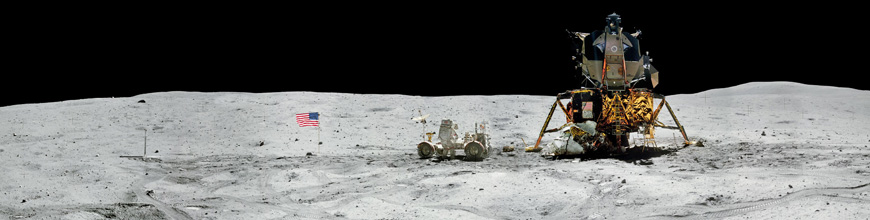
That piece of netting likely came from the smallest and most easily unsnapped section toward the front of the Lunar Module – a souvenir that most if not all crews took home with them – which is visible behind Gene Cernan in this photo.

A side effect: Funnily enough, though these dishes and others that I’ve made in the last five or six weeks are all quite tasty and not exactly low-calorie, I’ve dropped several pounds eating only the things I’ve made and no fast food. Pretty telling, that.

This slideshow requires JavaScript.

Christmas in April

Click for a larger version

Godfrey Daniel! My buddy Carl, who owns one of the five best cheesesteak places around – his brothers own the others, and all are open for pickup only – felt bad when I said his subs were foremost of the three things I miss the most, and said on the phone today that he’d drop off a pita Western cheesesteak along with some cryovac packages of the special cuts of steak that are sliced each morning in a specific manner, a stack of cheese, and some of their custom recipe sub rolls that I can freeze and cook at will. Now that is a good friend.

No need of a diner

Click for a larger version

I’ve got everything right here, really, including the 2-½-pound 13″ oval plates, but that’s been the case for years. Nothing new.

When I do visit diners, my litmus test is this morning’s breakfast above, corned beef hash and poached eggs (I don’t expect marmalade and blackberry jam to be available). Some fail, most commonly for lack of a crust on the hash, a minor flaw, and/or refusing to poach eggs outright or poaching them as if they don’t know how, both full-stop errors that require head-shaking and tut-tutting.

Years ago, meatloaf would be another test of a diner’s goodness for me, but I forever gave that up when I started with the Manhattan-based Comfort Diner’s already excellent softer-textured meatloaf recipe (its secret: oatmeal instead of bread crumbs), ran with it, and made it really excellent – my enhanced version at the link. I guarantee without a second thought that all other meatloaf pales in comparison, so there’s no point to me trying some random diner’s meatloaf. I mean, c’mon:

Go ahead, click it

Go ahead, build it – we’ll loan you the money

A print of “Clipper at the Gate” by William Phillips, which depicts Pan Am’s Boeing 314 “California Clipper,” is in my office

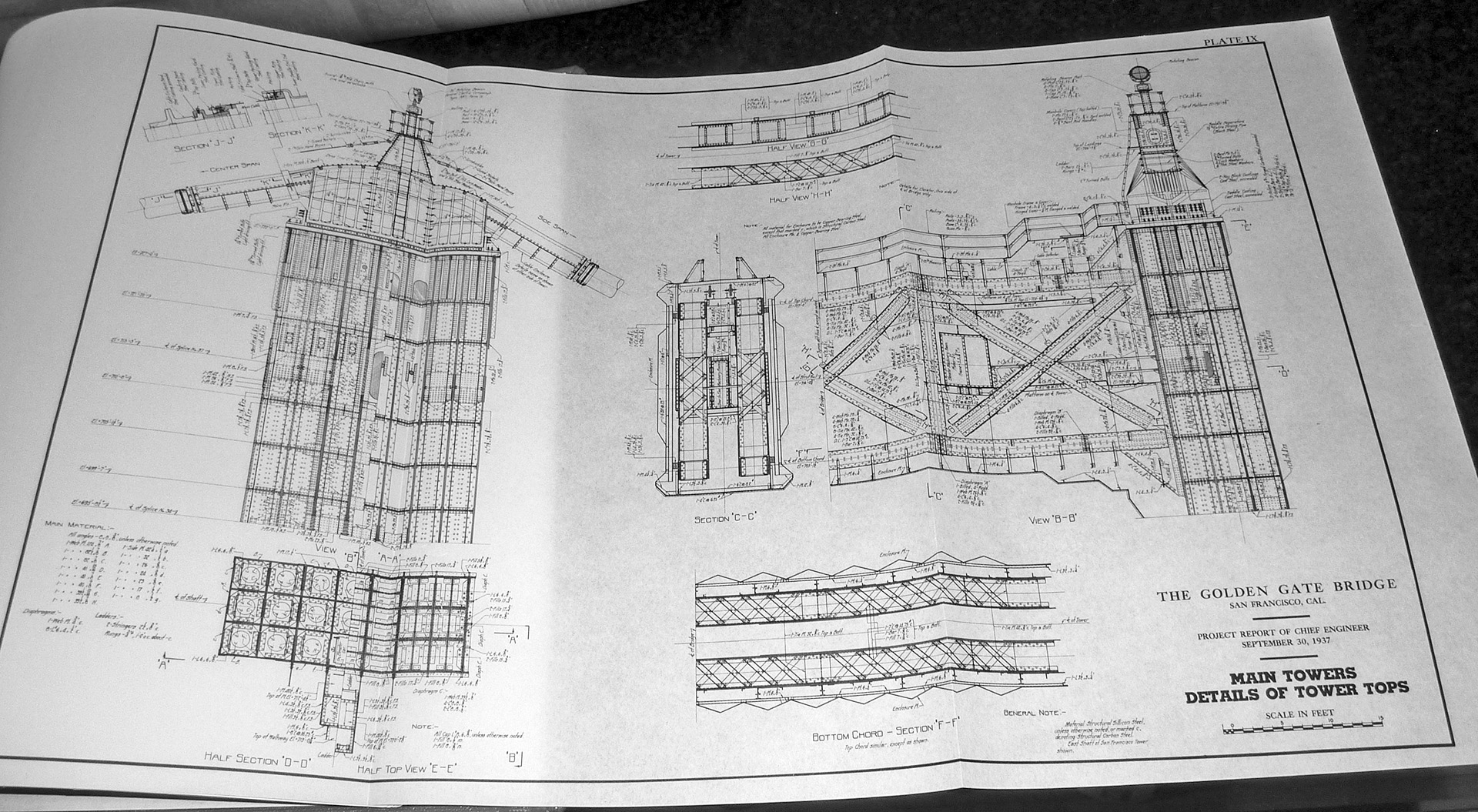
Ever wondered how much it cost to build the Golden Gate Bridge in the 1930s? US$35 million. To repeat it today? Engineers estimate it could be done for maaaybe a billion. The first four images below are from my 1938 copy of The Golden Gate Bridge: Report of the Chief Engineer to the Board of Directors of the Golden Gate Bridge and Highway District, a 300-page book published several months after the bridge opened that’s filled with dozens of construction photos you don’t often see elsewhere, treatises on methods and techniques, lots of fold-out engineering drawings, and the like.

Seven years after the original construction estimate in 1930, the actual construction costs came in $40,000 under. And here’s how they came up with the then astronomical sum of $35M in the middle of the Great Depression: public subscription. The people of the Bay area, tired of lengthy and expensive ferry journeys, really wanted that bridge. Good on them.

You can click any of these for a larger version. Following the excerpts from the book are a few photos I took of the bridge.

Halfway down this Internet Archive page, there’s a link to a PDF of the 1970 reprint edition of the Chief Engineer’s report. Looks precisely like my vintage copy: https://archive.org/details/goldengatebridge1970gold/mode/2up

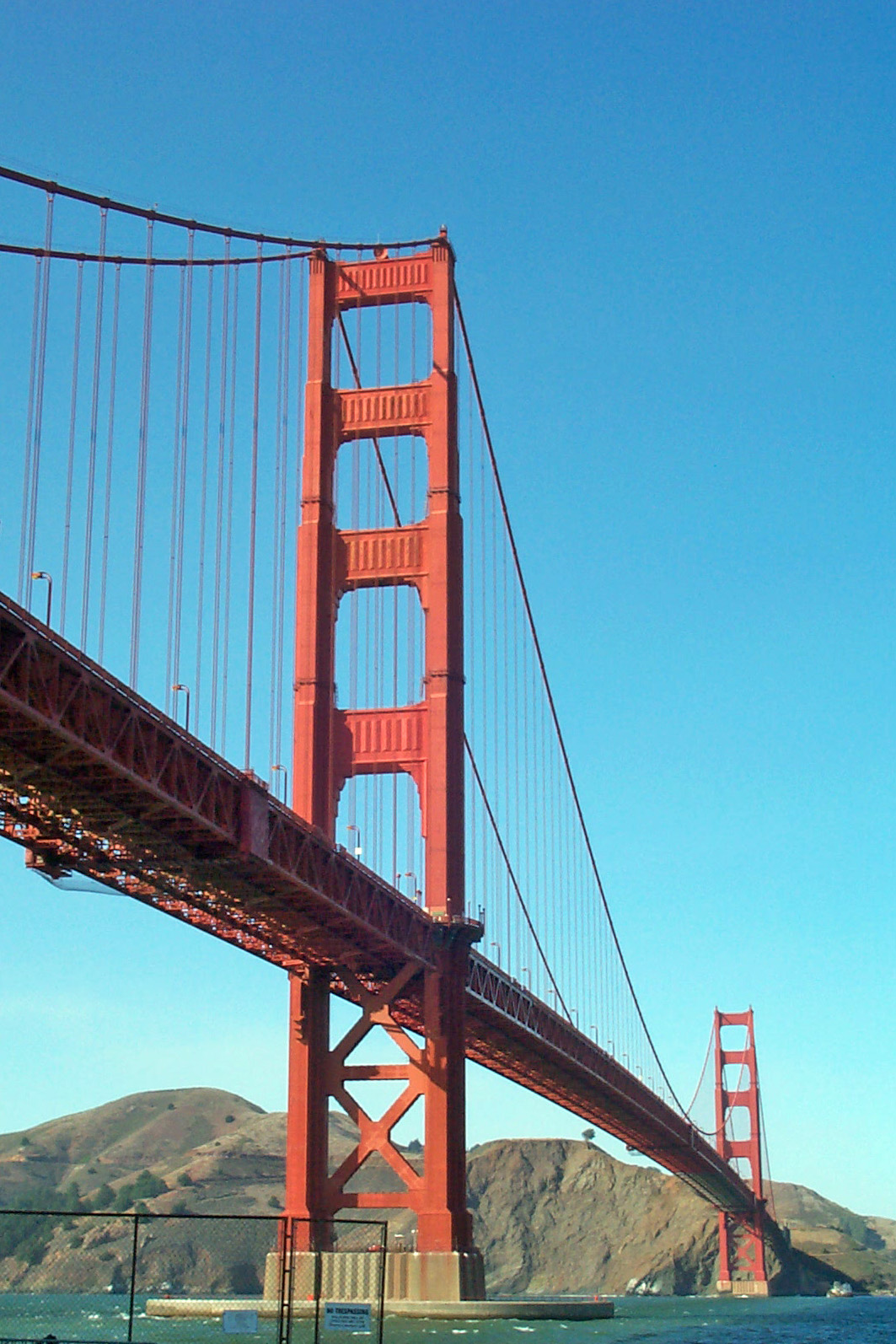
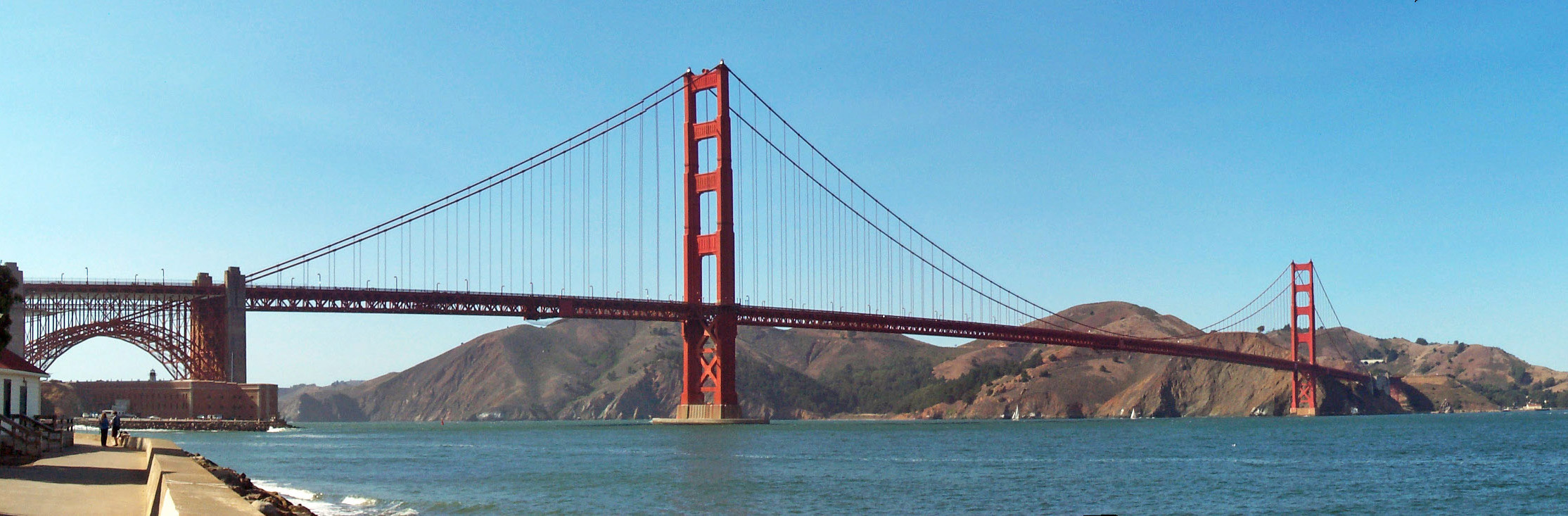
I took these photos of my favorite bridge from, respectively, Fort Point, Crissy Field, and the deck of the tall ship Hawaiian Chieftain, which was based in San Francisco at the time. I’ve always used the Fort Point one as my phone background. These were taken with a paltry 2-megapixel Kodak DC-280 and so aren’t of the finest resolution, but they still look pretty good to me.

Click any of these for a larger size.

The towers top out at 746 feet – twice the height of a Saturn V rocket

That small dish – actually about 10 feet in diameter – at the top of the tower on the San Francisco side is one of a back-to-back pair of microwave repeater antennas. There’s video of the 2,500-pound assembly being swapped out by helicopter in 2009 here: https://youtu.be/Kosw1yb2RFg

Three photos stitched together using the free open source Hugin

Marin tower; the building, on a spit of rock 150 feet in front of the tower, is what remains of the long-defunct Lime Point fog station and lighthouse

All of the deck suspension cables – also known as vertical suspender ropes – were replaced in the 1970s, and I have a slice of one of the original ropes. This four-inch long section is incredibly heavy for its small size at 2.1kg/4.6lbs, which says something about the quality of that steel. Each of the seven braids of the cable is, in turn, composed of thirty-two strands of steel, for a total of 224 strands in each cable.

Just being the moon is enough

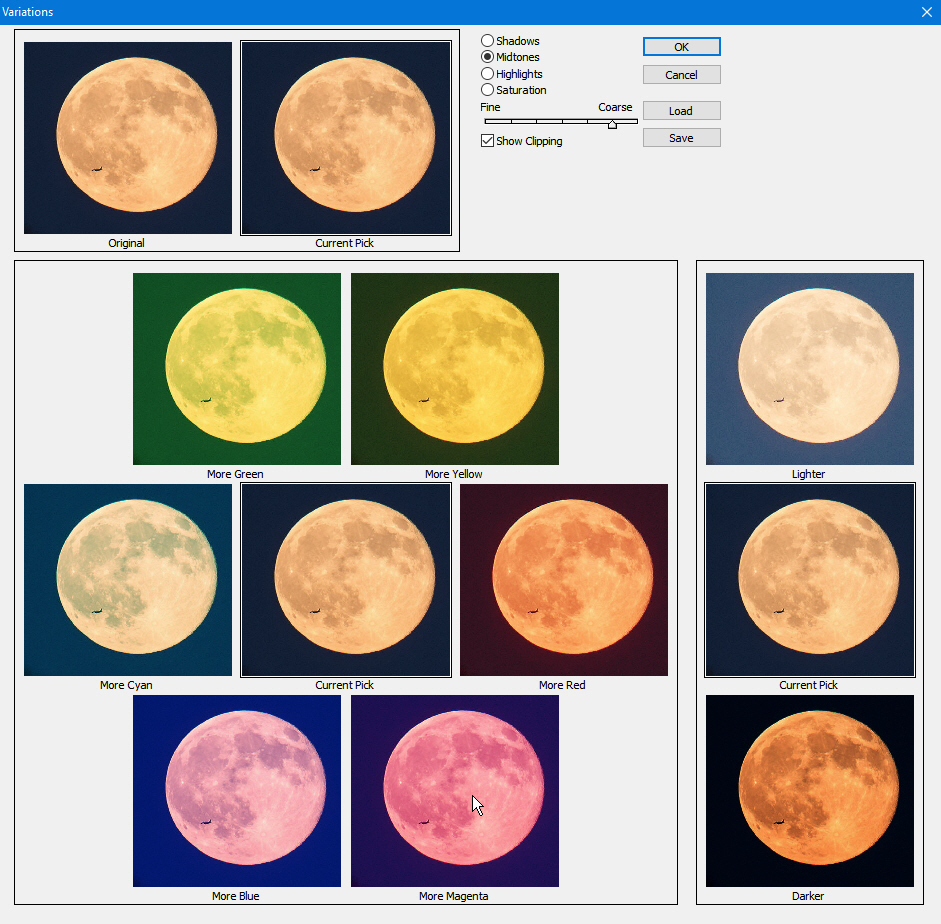
It doesn’t have to be super or blood or lentil or chicory or wolf or rabbit or water vole or what-the-hell-ever the latest foolish name is that some numpty came up with a few days ago while implying it’s been called that for millennia. It’s special and beautiful regardless of the month or the phase, and it doesn’t need extra names. I was prompted to post the unfiltered shots below that I’ve taken in the last decade or so when I saw all the suspiciously “pink” supposedly “super” moon pictures today but just kept seeing this dialog pop up in my head accompanied by a little “doink” noise:

I’d just like to point out once again that the term “supermoon” was coined by an astrologer writing in 1979 for Dell Horoscope magazine, published by Penny Publications primarily for the supermarket checkout trade. There’s no real basis for its current popularity other than as a handy column-inch filler and whatever the digital equivalent of that is called. My choice would be “dross.”

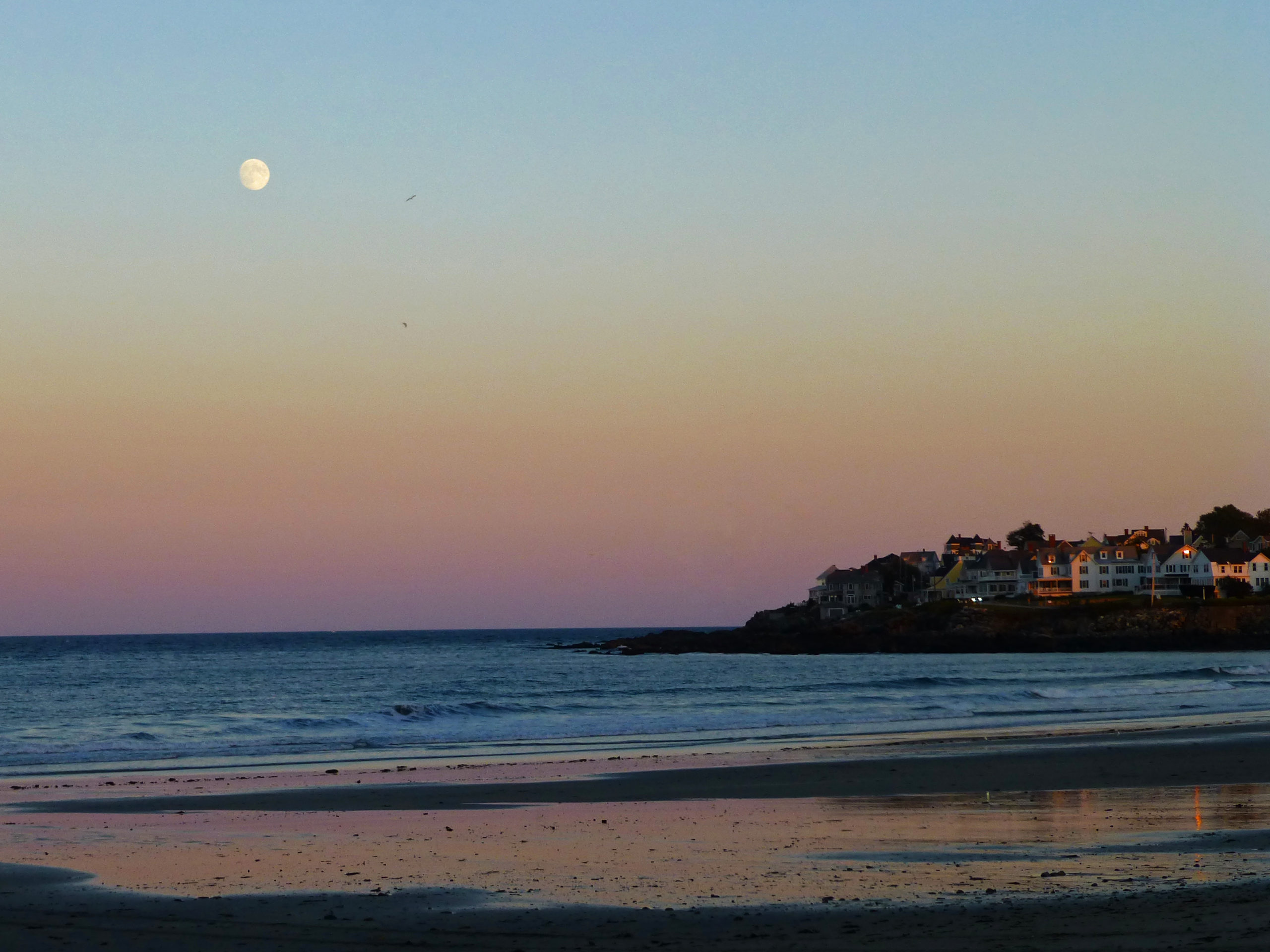
I offer no silly names, no patently ridiculous size claims, no fake colors. Just the moon. It’s plenty good enough as is. You can click any of these for a larger version.

Westford, Massachusetts

York Beach, Maine

Harvard, Massachusetts

York Beach, Maine – if your browser supports full-screen, try clicking on this and pressing F11

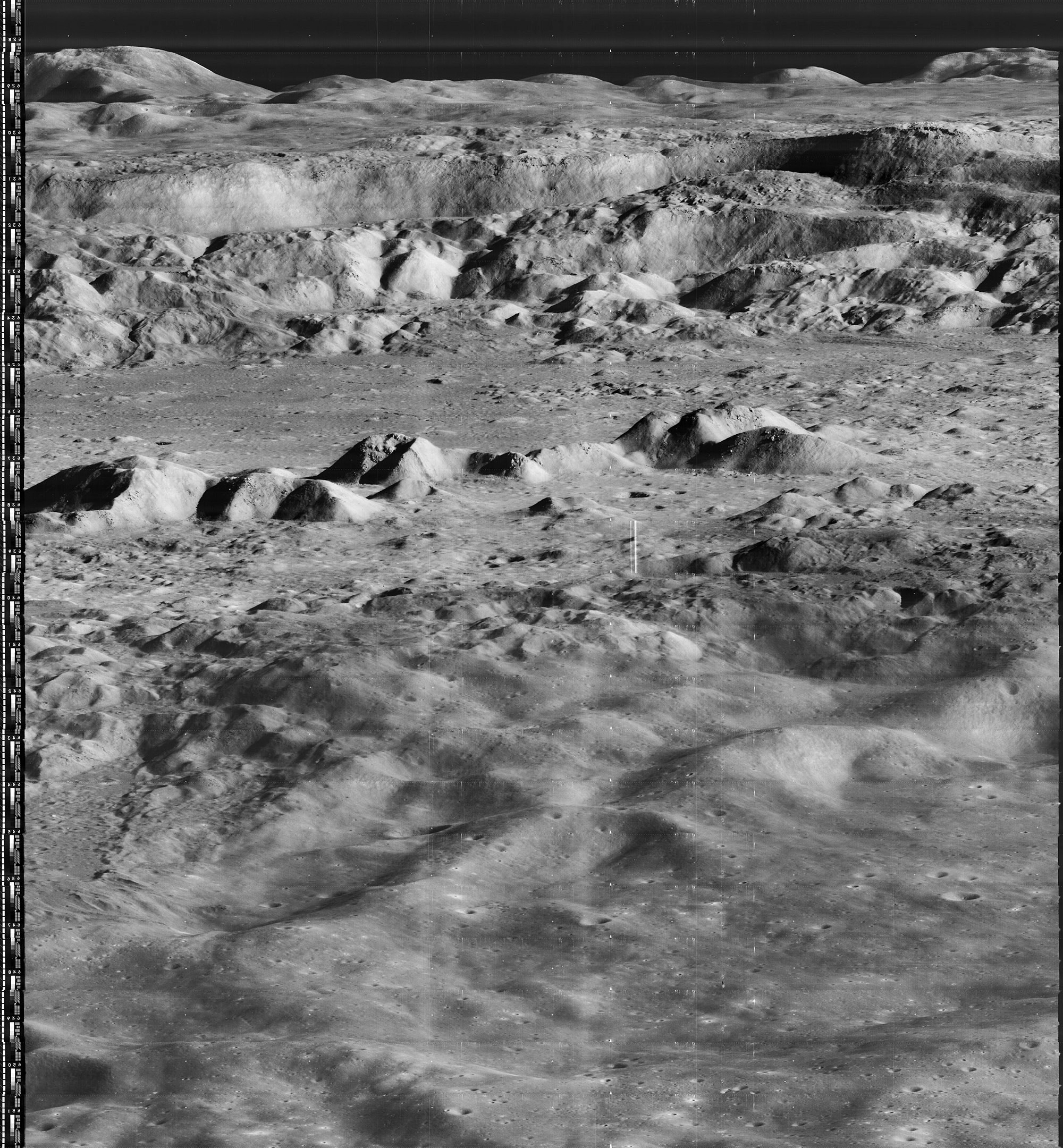
I didn’t take the following, but they’re a few of my favorites from a much closer perspective. You can click on them, too, to see a larger size.

Copernicus oblique view, Lunar Orbiter II Frame 162-H3, November 1966

Pete “Tweety” Conrad having the time of his life, Apollo 12, 1969

Apollo 12 Lunar Module “Intrepid” on its way to the Ocean of Storms

John Young packing for a field trip in the Descartes Highlands, Apollo 16, 1972

Not of the moon itself but related:

Apollo 15 launch, 1971

Apollo 16 launch, 1972

Neil Armstrong back inside the Apollo 11 Lunar Module Eagle immediately after the first moonwalk

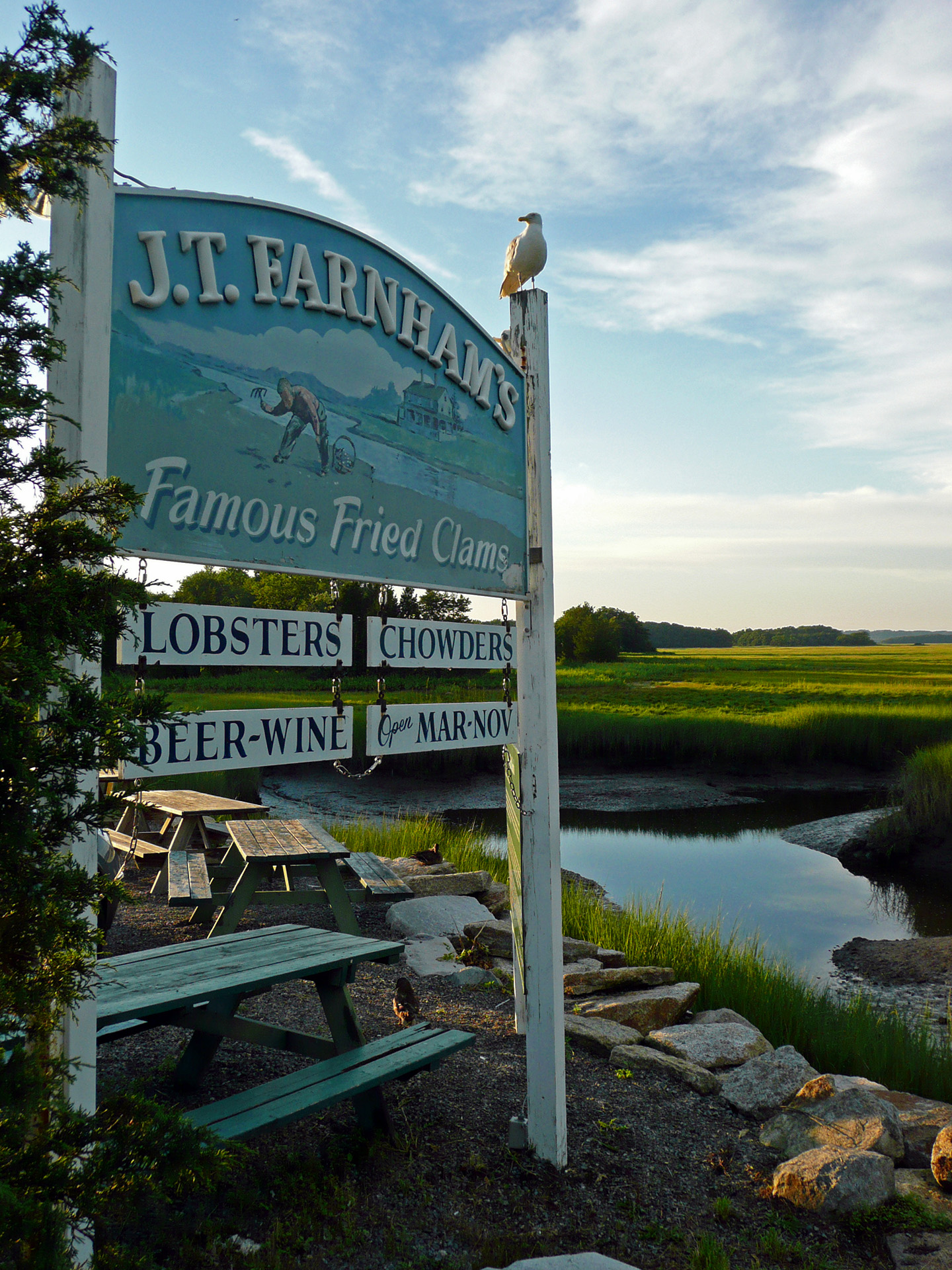
“Lovely clams! Wonderful clams!”

Click for a larger version

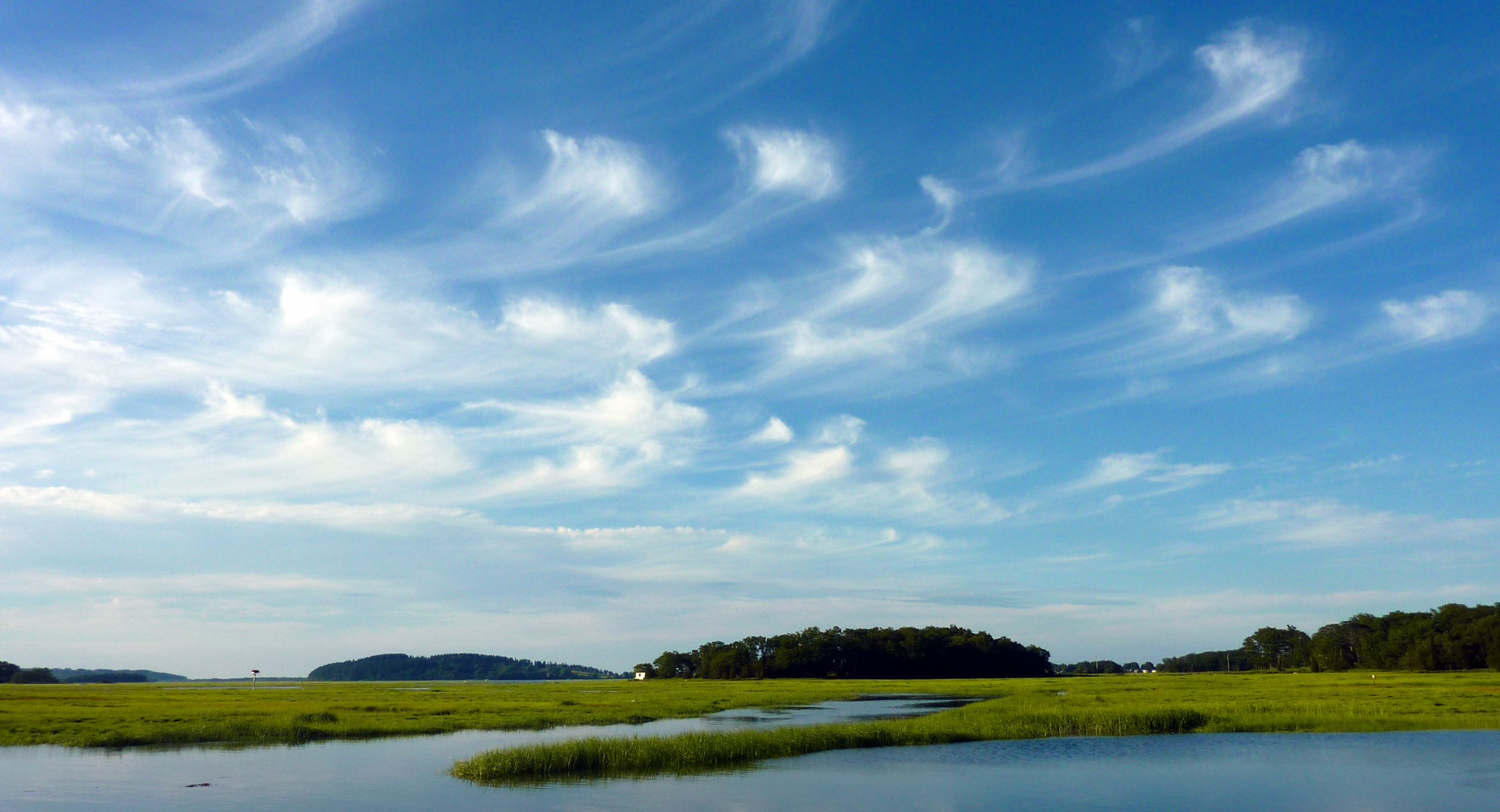
Gorgeous cirrus uncinus (“curly hooks”) clouds – sometimes called mares’ tails – over the Essex Salt Marsh in Massachusetts adjacent to Route 133. I took this picture on a hot day in July and it was oddly pleasing to know that’s snow falling at 25 or 30,000 feet.

The Essex marsh is part of the 20,000-acre Great Marsh that extends from Cape Ann in Massachusetts north into New Hampshire (map at the link). The nest platform just visible at the lower left of the top photo is one of a few dozen set up in the Great Marsh for ospreys. The shot below, which I took in April 2012, shows mom and pop (one high, one low) getting some grub for the two chicks in the nest. The year after I took that photo, the Greenbelt conservation trust set up their OspreyCam next to this platform for a few years, later moving it to another nest in Gloucester.

Click for a larger version

Ospreys are cool, but marsh wildlife is not my chief interest at that location, nor are esoteric clouds.

Click for a larger version

Click for a larger version

I’ll probably be internally hearing the Vikings from the Monty Python Spam sketch singing the title of this post for the rest of the day now, but I don’t mind too much.

Strange times, odd scenes

Click for a larger version and then view at its full size of 2048 x 1448

This 1850 photograph, taken a year after the peak of the California Gold Rush, shows just some of the hundreds of ships from countries all over the world that had been abandoned in and around San Francisco Bay as passengers and crews alike joined the rush. The photo shows part of the not very large Yerba Buena Cove; more than 800 ships lay derelict in that cove alone. In the several years following this photo, the cove was entirely reclaimed with landfill and it’s where a good portion of downtown San Francisco is now around the foot of Market Street. The wood from many of these ships was recycled to make buildings and furniture, but some sank in place, got buried during the reclamation, and are still occasionally found today underneath new construction.


Click for a larger version

As with most gold and silver rushes, relatively few individuals made a lot of money finding the shiny stuff. Because of the extreme tonnages of earth and water movement required after the brief initial somewhat easy pickings, large commercial enterprises took over most of the effort and profit within months, often hiring solo prospectors – almost all of them rank amateurs, remember – who were finding little or no gold and quickly becoming desperate. They weren’t paid well, which made it difficult if not impossible to save up for passage back home. A decade after the California Gold Rush, even Mark Twain tried and failed miserably at the Comstock (silver) Lode in Virginia City, Nevada, later documenting the mortification in his fantastic 600-page travelogue of the West, Roughing It (links to a sample from the book). The great majority of individuals who did make a bundle were the shrewd women and men who supplied hotel and boarding house rooms, hot meals, prospecting tools, and camping gear to the pipe dreamers – at prices commensurate with the times.

“How much is this hyar pickaxe?”
“Depends – how much you got?”

I think it’s almost a certainty that the value of all those ships in San Francisco Bay far exceeded the total riches found by their crews. One can only imagine their thousands of stories of lives changed forever.